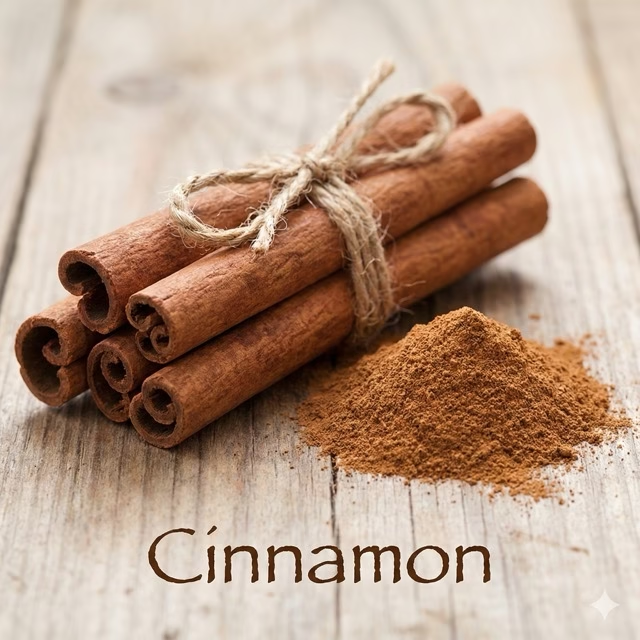
Cinnamon (Dalchini) – The Metabolism Booster
Cinnamon (Dalchini) – The Metabolism Booster Read Post »
In Ayurveda, herbs are not used to suppress symptoms — they are chosen to support balance and digestion.
Unlike modern supplement culture, which often isolates compounds and standardises dosage, Ayurveda views herbs as living substances whose effects depend on constitution, digestion, preparation, and context.
This section explores Ayurvedic herbs in a practical and grounded way. Instead of presenting herbs as universal cures, the articles here explain how and why specific herbs are used, what they support in the body, and when they may or may not be appropriate. The focus is on understanding purpose rather than promoting consumption.
You’ll find discussions on commonly used herbs, traditional formulations, and home remedies, along with explanations of how herbs interact with digestion (Agni) and metabolic balance. Where relevant, we also explore preparation methods — such as teas, decoctions, and powders — because how an herb is taken often matters as much as which herb is chosen.
This category also addresses a common modern confusion: the idea that “natural” automatically means “safe for everyone.” Ayurveda takes a more careful approach, recognising that herbs can be supportive or disruptive depending on the individual and situation.
If you’re new to Ayurveda, it’s recommended to begin with Ayurveda101, where foundational concepts like digestion and balance are explained. If you’re already familiar with the basics, the articles in this section will help you apply that understanding to herbal use with greater clarity and responsibility.
Herbs work best when they support the body’s natural intelligence — not when they are used in isolation or excess.